Custom Booth Carpets for Trade Show Exhibitors: A Complete Playbook
Custom booth carpets give trade show exhibitors a branded floor that marks the booth, reads from the aisle and travels from show to show. Get Custom Carpets builds them as exhibition carpet, tiles, rolls or runners, returns a free mockup within 24 hours, and produces most orders in about 2 weeks. This playbook covers format, design, timing and quantity.
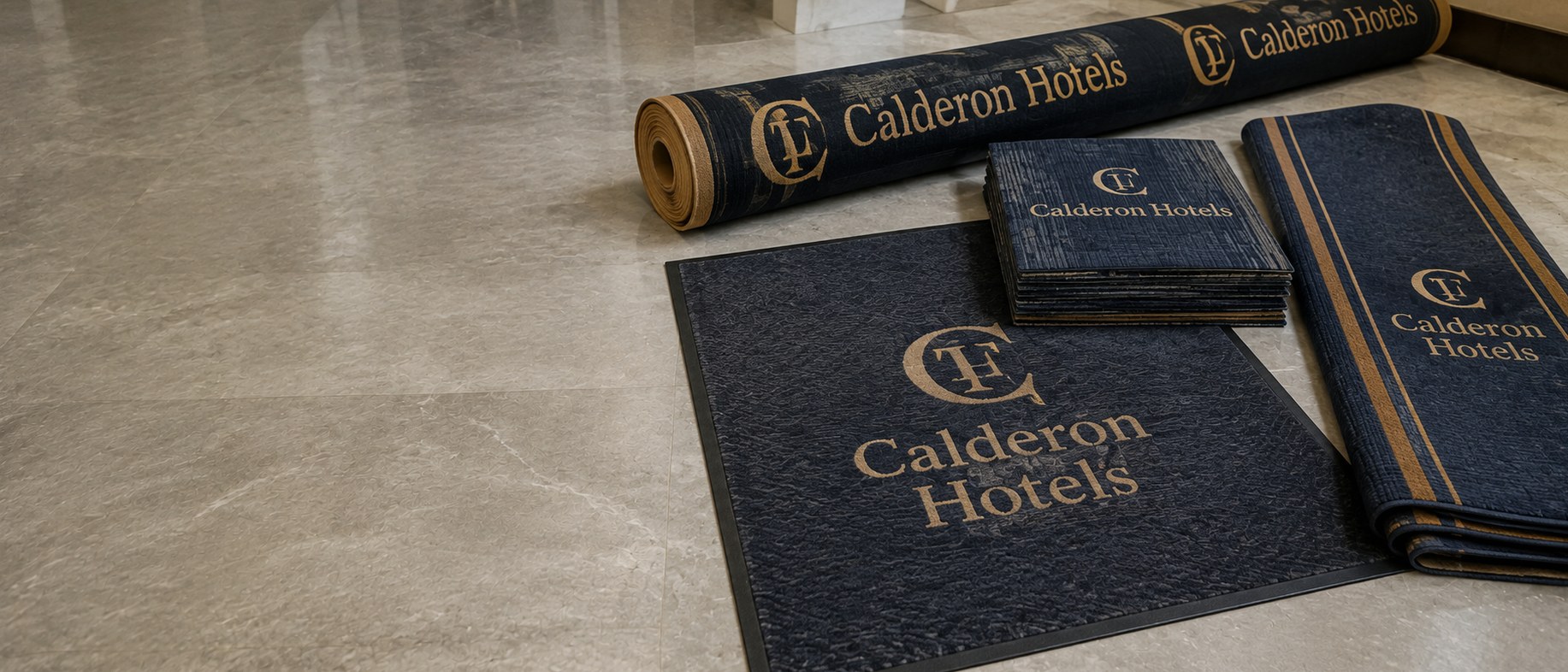
- Free mockup within 24 hours, with unlimited free revisions
- Standard production takes about 2 weeks; express shipping can speed delivery
- Minimum order is 12
- Formats include exhibition aisle carpet, carpet tiles, broadloom rolls and printed runners
- Pay nothing until you approve the design
Why do trade show exhibitors order custom booth carpets?
Trade show exhibitors order custom booth carpets because the floor is the largest surface in a booth and the one most exhibitors leave plain. A branded carpet from Get Custom Carpets turns that surface into a logo, a color field and a set of directions, so the booth reads as yours from the aisle before anyone looks at the backdrop.
Show-supplied carpet is a rental in a standard color. It covers the concrete, but it says nothing about the company standing on it, and it looks the same as the booth next door. A custom carpet does three jobs at once: it marks the edge of your space, it carries the brand at the eye level of people scanning the hall, and it can steer visitors toward the demo table or the meeting corner.
Custom carpets also travel. The same carpet can come back for the next show on your calendar, which keeps the booth consistent from city to city and saves the team from ordering plain rental carpet each time. For exhibitors who attend several shows a year, that consistency is often the main reason to switch.
Which carpet format suits each kind of exhibit space?
The right carpet format depends on how the booth is laid out and how often it moves. Get Custom Carpets offers several formats that suit exhibitors, and most teams pick one main format and add a second for accents. The table below matches each format to the booth situations where it works best.
| Format | Best for | Why exhibitors choose it |
|---|---|---|
| Exhibition aisle carpet | Inline and corner booths, aisle frontage | Built for show floors, carries a logo or full-color design edge to edge |
| Custom carpet tiles | Booths that change shape between shows | Tiles reconfigure, pack into cases and replace one at a time |
| Broadloom carpet rolls | Large island booths and pavilions | Covers a big footprint with fewer seams |
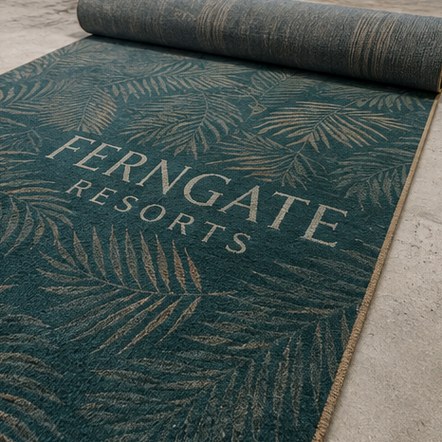
| Printed event runners | Entry paths, product walkways, stage approaches | Directs foot traffic and adds a second branded surface |
| Luxury cut pile carpets | Hospitality lounges and private meeting rooms | Softer, richer feel underfoot for seated conversations |
If your booth size changes from show to show, tiles usually win. If you book the same large space every year, a roll or a single exhibition carpet gives the cleanest look. Runners pair well with either.
How should a booth carpet design work from the aisle?
A booth carpet design should be readable by someone walking past at an angle, not only by someone standing in the middle of the booth. That means a bold logo placed where traffic approaches, a simple color field, and nothing small enough to disappear under a table leg or a visitor’s shoes.
Start by deciding which edge faces the main aisle. On an inline booth that is the front edge; on a corner booth there are two; on an island booth every side is a front. Place the main logo near the busiest approach and orient it so it reads right side up to people walking in. On an island booth, many exhibitors repeat a smaller mark on each side instead of one large logo that reads upside down from half the hall.
- Keep the center open. Furniture, counters and kiosks cover more floor than you expect, so keep critical artwork away from where fixtures will stand.
- Use the border. A brand-color border defines the booth edge cleanly and survives furniture changes.
- Add wayfinding. A printed path or arrow toward the demo station gives visitors a reason to step off the aisle.
- Match the backdrop. Carry the same palette as your back wall so the floor and the graphics read as one display.
What should an exhibitor send Get Custom Carpets to start an order?
An exhibitor should send Get Custom Carpets the booth footprint, the logo file, the brand colors, the show date and a rough sketch of where furniture will stand. With those five things the team can return a free mockup within 24 hours, so you see the carpet on the floor plan before you commit to anything.
The booth footprint comes from your exhibitor kit or the show’s floor plan. Include whether the booth is inline, corner, peninsula or island, because that decides which edges need artwork. Vector logo files give the sharpest result, though the team can work from what you have and flag anything that needs cleaning up.
- Request a quote on the custom quote page with the footprint, show date and format you are considering.
- Review the free mockup, which arrives within 24 hours.
- Ask for changes; revisions are unlimited and free.
- Approve the design. You pay nothing until you approve it.
- Production runs about 2 weeks, with faster turnaround available through express shipping.
The full sequence is laid out on the how it works page.
When should a trade show team order booth carpets before the show?
A trade show team should order booth carpets early enough to cover the mockup, any revisions, about 2 weeks of production and shipping to the show’s receiving dock. Working backward from the show’s freight deadline, not the opening day, keeps the carpet from arriving after the booth is already built.
Most shows publish an advance warehouse date and a direct-to-show date in the exhibitor kit. The carpet needs to land before whichever one your team uses. Build in time for internal approvals too: marketing, the booth designer and sometimes a sponsor all want to sign off on the proof, and that review often takes longer than the mockup itself.
If the calendar is tight, say so in the quote request. Get Custom Carpets can discuss express shipping and tell you plainly whether the date is realistic. For a full season of shows, order the main carpet ahead of the first event and plan any event-specific runners separately, so a late sponsor change never holds up the core booth.
Can one custom carpet work for a whole season of shows?
Yes, one custom carpet can work for a whole season of shows when the design focuses on the brand rather than a single event. Get Custom Carpets recommends keeping event names, dates and campaign slogans off the main carpet and putting them on runners or smaller pieces instead.
A season carpet carries the logo, the brand colors and the border. Event-specific messaging lives on a printed event runner that can change from show to show. That split keeps the expensive, central surface useful for longer and still lets each show feel current.
Booth size matters too. If your space shrinks at a smaller regional show, a single large carpet may not fit, while a tile layout can drop a row and still look complete. Teams with an unpredictable calendar often choose tiles for the main floor for that reason. Teams that book the same footprint every time get a cleaner single surface from an exhibition carpet or a broadloom roll.
What goes wrong with booth carpets, and how do exhibitors avoid it?
The most common booth carpet problems are a logo hidden under furniture, artwork that reads upside down from the main aisle, a carpet that does not fit a changed booth size, and an order placed too close to the freight deadline. Each one is avoidable with a few checks at the mockup stage.
- Hidden logos. Mark counters and kiosks on the sketch you send so the mockup shows what stays visible.
- Wrong orientation. Confirm which edge faces the busiest approach before approving the proof.
- Size changes. If booth assignments move between shows, consider tiles or a design that still works when trimmed.
- Late orders. Count backward from the show’s freight date, not the opening day.
- Too much detail. Fine text and thin lines get lost underfoot; keep artwork bold.
Exhibitors who also run a showroom or office can reuse the same artwork on logo entrance carpets, which keeps the brand consistent between the booth and the front door.
How many booth carpets does an exhibitor need?
Most exhibitors need one main booth carpet per booth configuration, plus runners or accent pieces for paths and stages. The minimum order at Get Custom Carpets is 12, which suits teams ordering tiles, matching runners for several shows, or carpets for more than one booth at the same event.
Companies that send two teams to two shows in the same week need two sets, not one. Teams using tiles should consider a few spares, because a single stained or damaged tile can be swapped on site without replacing the whole floor. Ask about spares when you request the quote so they come from the same production run and match the rest of the floor.
If you are unsure how to split the order, describe the show calendar in the quote request. The team at Get Custom Carpets can suggest a mix of main carpet, tiles and runners that covers the season without ordering pieces you will not use.
Frequently asked questions
What makes a custom booth carpet different from the plain carpet a show provides?
A custom booth carpet carries your logo, brand colors and wayfinding, while show-supplied carpet is a plain rental in a standard color. Get Custom Carpets produces booth carpets that mark the edge of your space, catch attention from the aisle and come back for the next show, so the booth looks the same in every city.
Can a booth carpet carry a different design for each event on our calendar?
A booth carpet can carry event-specific artwork, but most exhibitors keep the main carpet focused on the brand and put event names and dates on printed runners instead. That way the central carpet stays useful all season, and only the smaller runner changes from show to show. Each design gets its own free mockup.
Should the logo on a trade show carpet face the aisle or the back wall?
The logo on a trade show carpet should read right side up for people approaching from the busiest aisle. On an inline booth that is the front edge. On a corner or island booth, exhibitors often repeat a smaller logo on each open side so visitors arriving from any direction see the brand the right way up.
Can a custom booth carpet include floor graphics that guide visitors to a demo station?
A custom booth carpet can include arrows, a printed path or a highlighted zone that leads visitors from the aisle to a demo station or meeting corner. Get Custom Carpets places these graphics on the mockup so you can check the route against your furniture layout before approving the design and starting production.
How far ahead should exhibitors request a booth carpet mockup before a show?
Exhibitors should request a booth carpet mockup well before the show's freight deadline, leaving room for internal approvals, revisions and about 2 weeks of production. Get Custom Carpets returns the free mockup within 24 hours, so the slowest step is usually your own review. Express shipping can help when the date is close.
Can printed event runners mark a path through a larger exhibit space?
Printed event runners work well for marking a path through a larger exhibit space, such as an entry walkway, a product aisle inside an island booth or the approach to a stage. Get Custom Carpets prints runners with the same artwork and colors as the main booth carpet so the whole floor reads as one design.
How should exhibitors account for furniture and display fixtures when designing a booth carpet?
Exhibitors designing a booth carpet should sketch where counters, kiosks, seating and display cases will stand and send that sketch with the quote request. Get Custom Carpets uses it to keep logos and key graphics in open floor areas, so the artwork stays visible once the booth is fully built and staffed.
Can a sponsor's logo share space on our exhibit carpet?
A sponsor's logo can share space on an exhibit carpet, usually as a smaller mark near the aisle edge or on a separate runner. Putting sponsor marks on a runner keeps the main carpet reusable if the sponsor changes next season. Get Custom Carpets shows both logos on the mockup for everyone to approve.
Is a custom booth carpet worth ordering for a single show?
A custom booth carpet can be worth ordering for a single show when the event is a major one for your sales year or when the booth needs to stand out in a crowded hall. Designing the carpet around the brand rather than the event keeps the option open to reuse it at future shows.
How can a trade show team keep a booth carpet clean during a multi-day show?
A trade show team can keep a booth carpet clean by vacuuming at the end of each show day, keeping food and drinks to one corner and blotting spills right away rather than rubbing. Exhibitors using carpet tiles from Get Custom Carpets can swap a stained tile for a spare overnight.
Who on the exhibit team should approve the booth carpet proof?
The booth carpet proof should be approved by whoever owns the brand guidelines and whoever owns the booth layout, often marketing and the exhibit manager. Collect their comments before replying so Get Custom Carpets can make one clean round of changes. Revisions are unlimited and free, and nothing is charged until approval.
Get a free mockup for your carpets
Send your logo or idea and the quantity you have in mind. Get Custom Carpets returns a free mockup within 24 hours, you approve the design before anything is produced, and standard turnaround is about two weeks with faster options available. Get a custom quote.
Win Free Stuff
Enter below for a chance to win plus receive 10% off your first order.
🎉 You are in!
We will text you your 10% off code. Good luck!