Most people shop for a custom logo mat by picturing a single rectangle at the front door. The facilities that actually keep their floors clean think in zones instead. A well-designed entrance is a staged system that scrapes, then wipes, then finishes, and getting the lengths and materials right at each stage matters far more than the logo printed on top. Here is how to size and specify a custom entrance mat system so it does its real job and still looks sharp.
The three-zone system, and why 15 feet is the number that matters
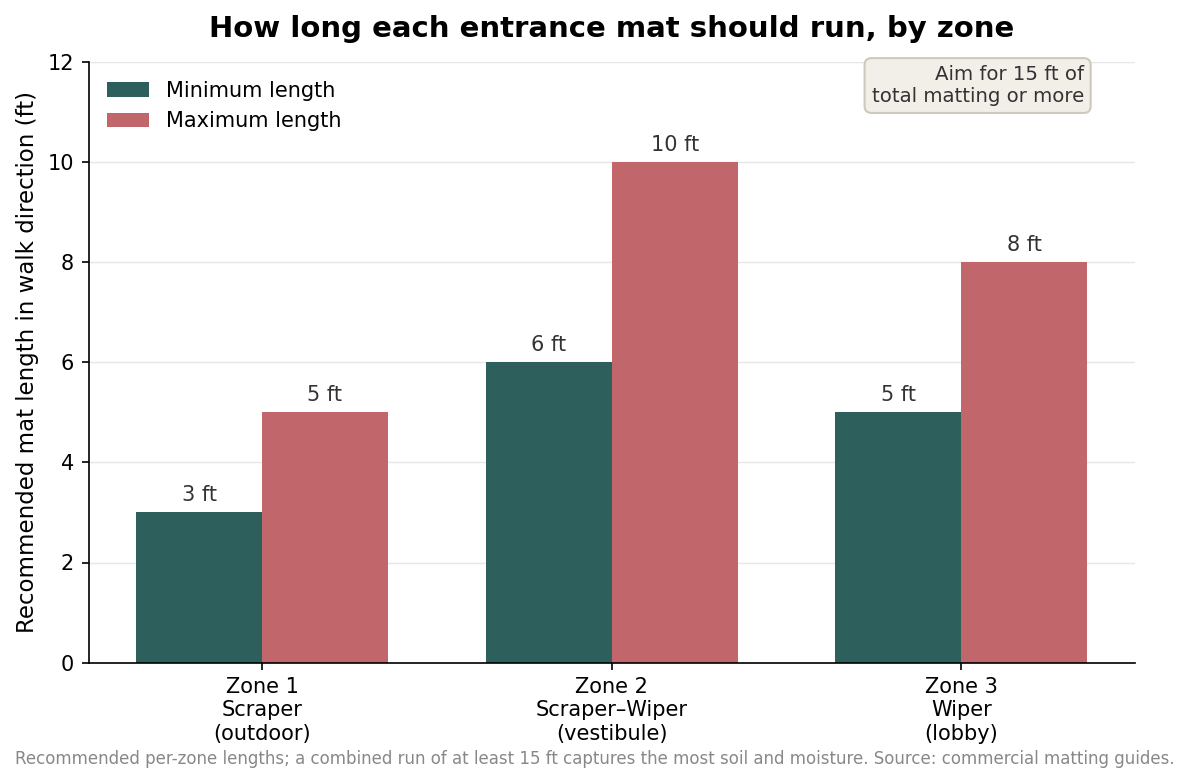
Commercial matting guidance is built around three zones working in sequence. The first is an outdoor or entry scraper that knocks heavy soil, grit, and mud off the sole. The second is a vestibule scraper-wiper that removes what is left and starts absorbing moisture. The third is an interior wiper that captures fine dust and dries the shoe before it reaches your finished floor. Run together, a properly sized system is credited with stopping up to 85% of the soil and moisture that would otherwise be tracked inside. The single most useful rule of thumb is total length: aim for at least 15 feet of matting in the walking direction across the three zones, because a person needs roughly that many footfalls to leave most of the dirt behind on the mat rather than on your floor.
Zone by zone: what each mat is actually doing
Zone one, the scraper, runs about 3 to 5 feet and lives outside or in the doorway. It wants an aggressive surface — molded rubber cleats or a coarse scraping face — that can shed gravel and stand up to weather and UV, which is why outdoor mats lean on polypropylene faces and rubber construction rather than soft carpet. Zone two, the scraper-wiper, is the workhorse at roughly 6 to 10 feet, usually just inside the door in the vestibule. A bi-level or waffle surface traps debris below foot level while an absorbent face pulls in water; some designs hold well over a gallon of water per square yard behind a dam border. If a building only has room for one serious mat, this is the zone to prioritize. Zone three, the wiper, runs about 5 to 8 feet into the lobby, uses a dense carpet fiber, and exists to dry the shoe and grab the fine dust the first two zones missed. It is also where a printed logo reads best, because foot traffic has slowed and the surface is a smooth carpet face.
Face fiber and backing: matching the build to the door
Two construction choices decide how long a mat lasts and how well it holds a logo. The face fiber is usually nylon or polypropylene. Nylon is the standard for indoor logo mats because it retains color, resists crushing under heavy traffic, and prints with the most vivid detail; polypropylene is the outdoor and scraper choice because it shrugs off moisture, sunlight, and chemicals. Commercial-grade mats typically run a face weight of 28 to 42 ounces per square yard, and heavier tufting genuinely does buy sharper logo definition and a longer service life. The backing is the other half of the decision. Nitrile rubber, generally 3/16 to 1/4 inch thick, is the premium commercial standard because it stays flexible in the cold and resists oil and cleaning chemicals. Cheaper SBR rubber works for light indoor duty but stiffens in winter, and thin PVC or vinyl backing belongs only on lightweight promotional mats, where it tends to curl at the corners after washing. Whatever the build, keep the profile low and the edges beveled so the mat lies flat and does not become a trip hazard at the threshold.
What dirt costs when the mats are too short
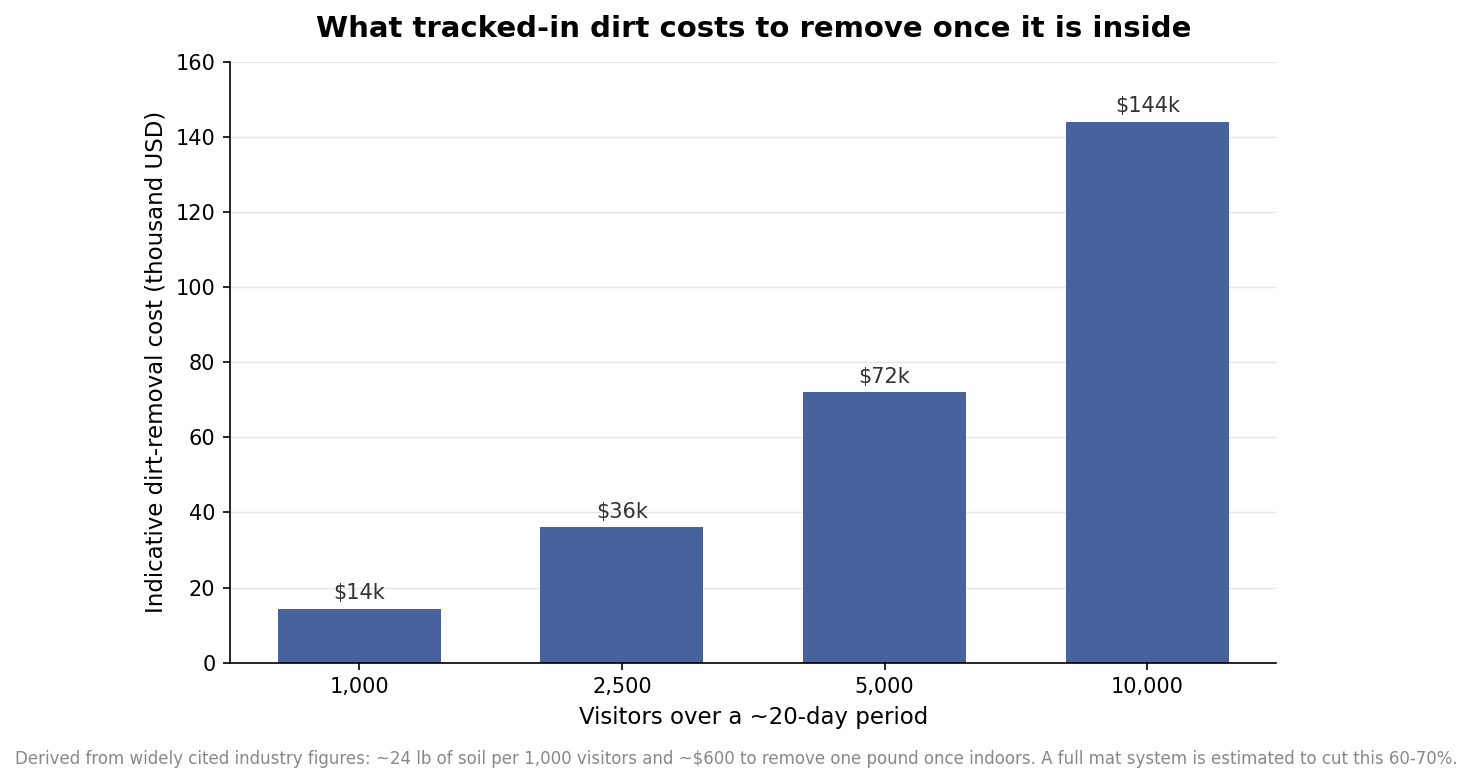
The reason all of this pays for itself is that dirt gets dramatically more expensive the moment it crosses the threshold. A commonly cited industry figure puts tracked-in soil at around 24 pounds per 1,000 visitors over a roughly three-week span, and removing a single pound of dirt once it is inside a building is estimated to cost about $600 by the time you account for labor, equipment, and replaced flooring. Multiply that across real foot traffic and the numbers climb fast, as the chart below shows. A complete mat system is estimated to cut those interior cleaning costs by 60 to 70%, which is why the payback on a properly sized run is usually measured in months rather than years. Treat the exact dollars as indicative rather than a quote, but the direction is not in doubt: undersizing the matting to save a few feet is almost always a false economy.
Printing your logo so it survives the traffic
Once the build is right, the decoration method determines how the logo ages. High-definition dye sublimation, in which computer-controlled jets drive color down into the fiber rather than sitting on top of it, is the method to ask for when you want photographic detail and color that will not wear off, because the dye becomes part of the yarn. Inlaid or precision-cut logos, where shapes are physically built into the mat, are the most permanent option for bold single-color marks and heavy outdoor use. Lower-cost surface prints and flocking exist, but they abrade with traffic and fade in sunlight, so they suit short-term promotional mats rather than a permanent entrance. When you request a quote, specify the zone and location, the finished size, the face fiber and backing you want, and supply vector artwork with your exact brand colors so the print shop can match them into the dye rather than approximating. Common stock footprints such as 3 by 5, 3 by 10, 4 by 6, and 4 by 8 feet cover most doorways, but a custom size cut to your actual opening is what lets the three-zone system work as designed.
Win Free Stuff
Enter below for a chance to win plus receive 10% off your first order.
🎉 You are in!
Check your email for your 10% off code. Good luck!